
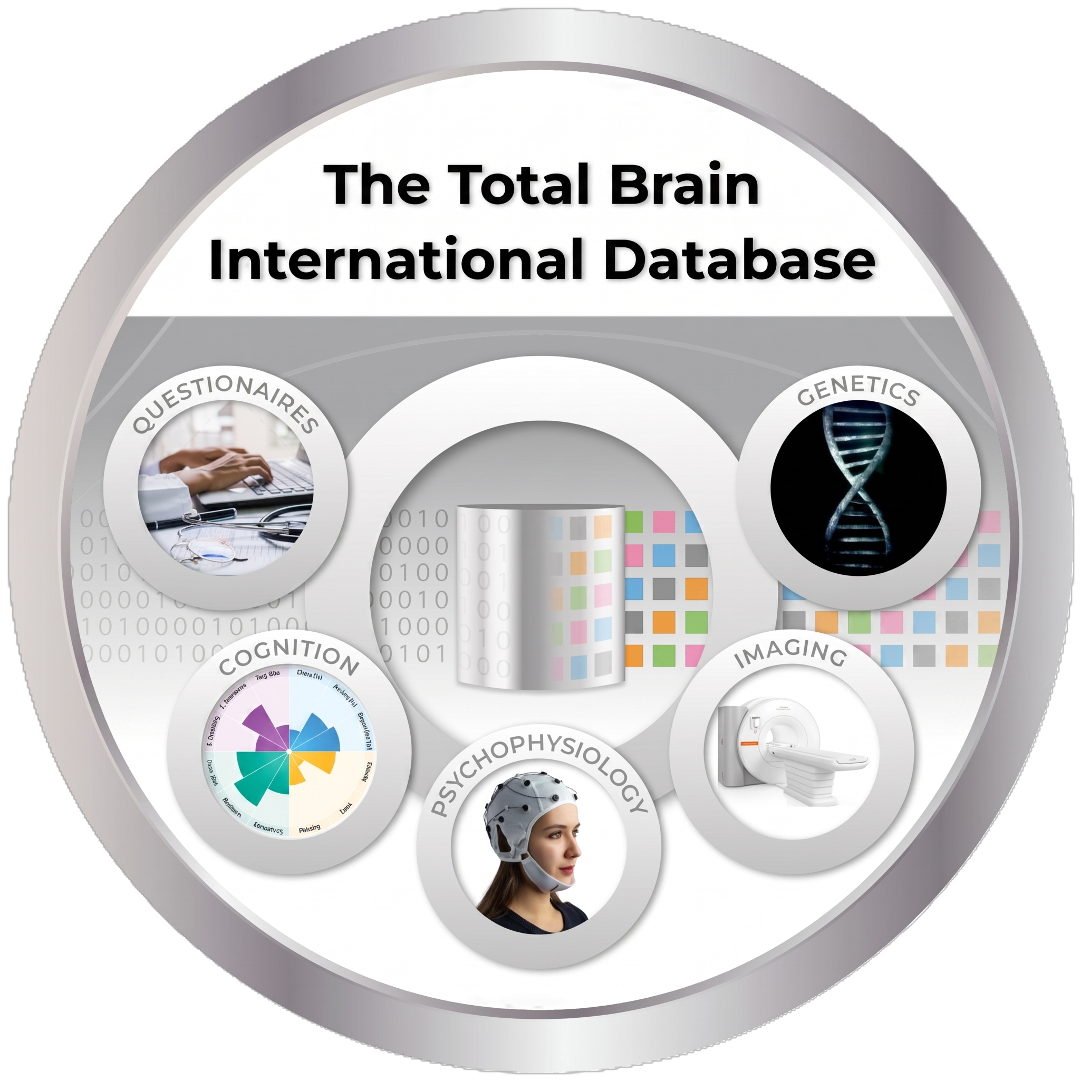
1. Database Unique Attributes
Depth and breadth of data provide a matrix of possibilities for new drug targets, clinical diagnostics, clinical subtypes, and genetics–biological–cognition interconnections.
Scale & Scope
Over 500,000 test sessions with over 4 billion data points, spanning 14 subject group types. Ideal for AI analysis.
Standardized Methodology
Standardized data collection allows pooling of data for analysis between studies and datasets — including seamless comparison of clinical and normative cohorts.
Integrative Continuum
Data types and paradigms designed to capture the full spectrum of brain processes, from non-conscious through to conscious and long-term self-regulation, for both cognitive and emotional functioning.
Global Sources
Majority from the US, with substantial contributions from Europe and Australia. Collected across 18 international testing sites.
Integrative Continuum of Brain-Body Functioning
The assessments and data metrics in the Total Brain International Database have been designed to capture the core processing elements along the spectrum of brain processes, following a continuum from non-conscious through to conscious and long-term self-regulation processes. The metrics provide an integrative framework both across this continuum and across levels of function (genetic, imaging, functional brain-body dynamics, cognitive performance, and self-report).
Individual variation in the way these systems operate and interact with each other can be mediated by many factors — including maturation, aging, and genetics. These factors play an ongoing role in brain plasticity as it continues to change and adapt over time. Only in a large and broad database can individual variation and related mediating factors be fully elucidated and accounted for.
The database has also been designed to capture the continuum from mental and cognitive wellness through to vulnerability and disorder. All assessments are standardized and identical between normative and clinical groups, meaning that data can be seamlessly pooled together for combined analysis across all cohort groups and data sources.
2. Wellness, Stress and Resilience
The unprecedented breadth of integrative data in this large normative cohort makes it a powerful source for modelling patterns of genetic–biological–cognition interconnections, and the complex pathways and mechanisms of action that they give rise to.
This data set is particularly well positioned for explorations of emotional functioning and wellbeing, the interplay of stress and resilience within these systems, and how genes and gene–environment effects interact with these systems to influence current cognitive and emotional functioning.
- The core normative cohort of over N = 4,700 spans Cognition (14-test battery), Questionnaire (13+ scales including lifestyle, nutrition, wellbeing, emotional functioning, personality, medical history), Brain function (10 psychophysiology paradigms, subset with structural imaging), and Genetics (subset with ~700 SNPs), covering the lifespan from 6 to 98 years.
- An additional expansive normative cohort of over N = 400,000 provides cognitive performance and emotional functioning data including DASS Depression, Anxiety, Stress scale and BRISC self-regulation scale for Resilience, Negativity Bias, and Social Functioning.
Example Applications
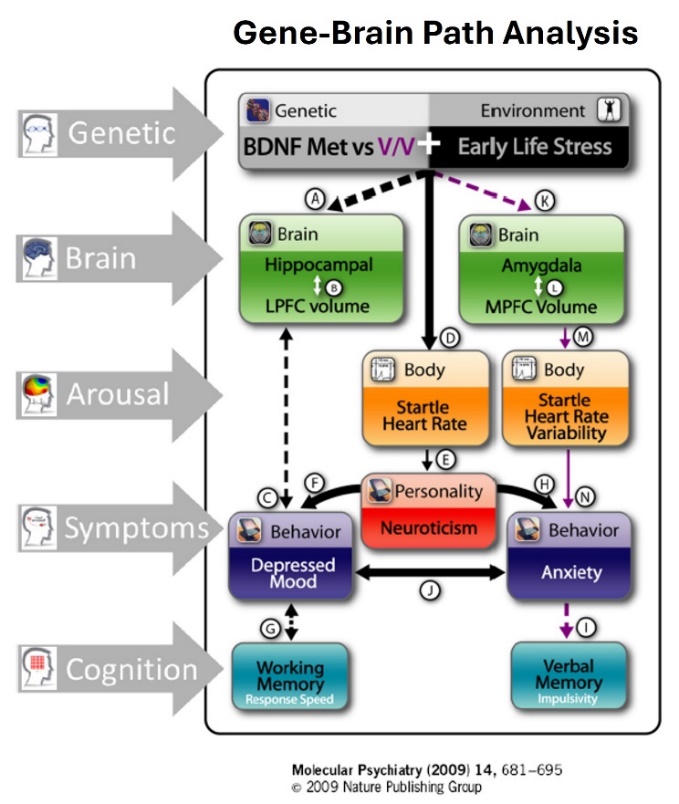
1. Gene–Environment Interaction Pathways to Mental Health. Path analysis modelling with part of this dataset has elucidated how genetic BDNF variants interact with experienced childhood trauma such that childhood trauma leads to adult Anxiety via amygdala-MPFC emotional brain networks, and to both Anxiety and Depression in met allele carriers via Cognitive Hippocampal-LPFC brain networks.
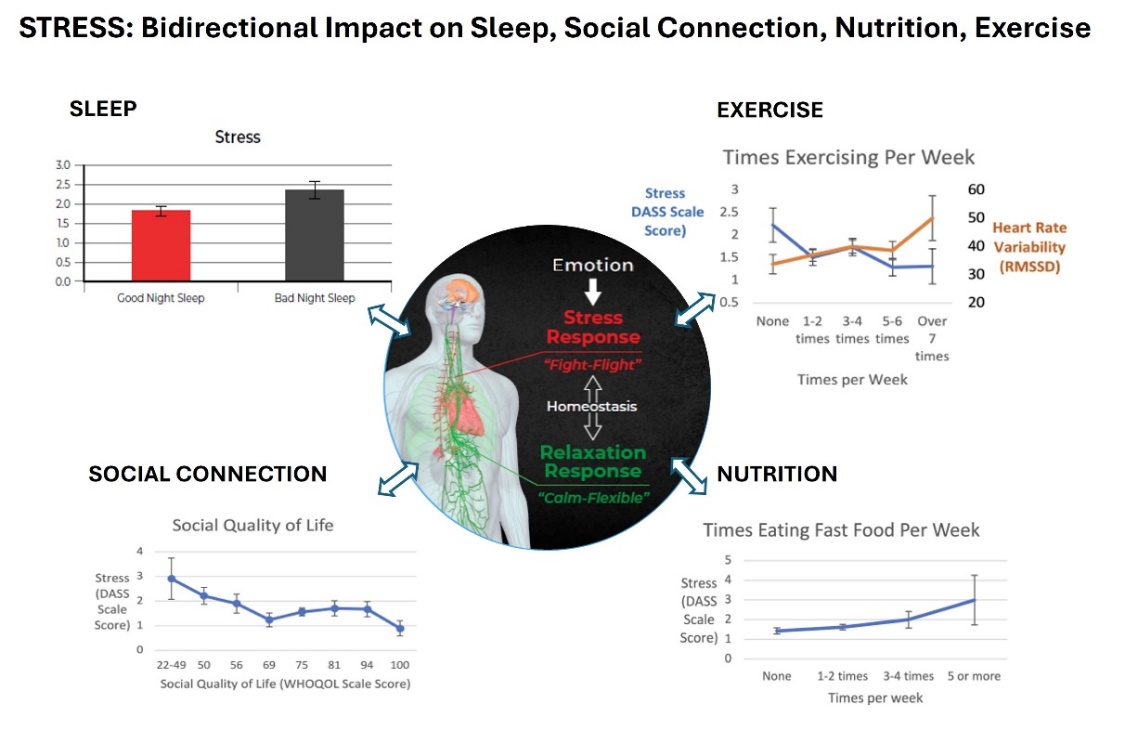
2. Stress and Resilience. Stress is related to a wide variety of metrics in the database, including Sleep, Exercise, Heart Rate Variability, Nutrition, and Social Connectedness. The database includes not only self-report measures of Resilience, but many of the underlying factors — biological stress-recovery metrics, cognitive flexibility, objective metrics of emotional response and regulation (at conscious and subconscious levels), positivity bias, and social support.
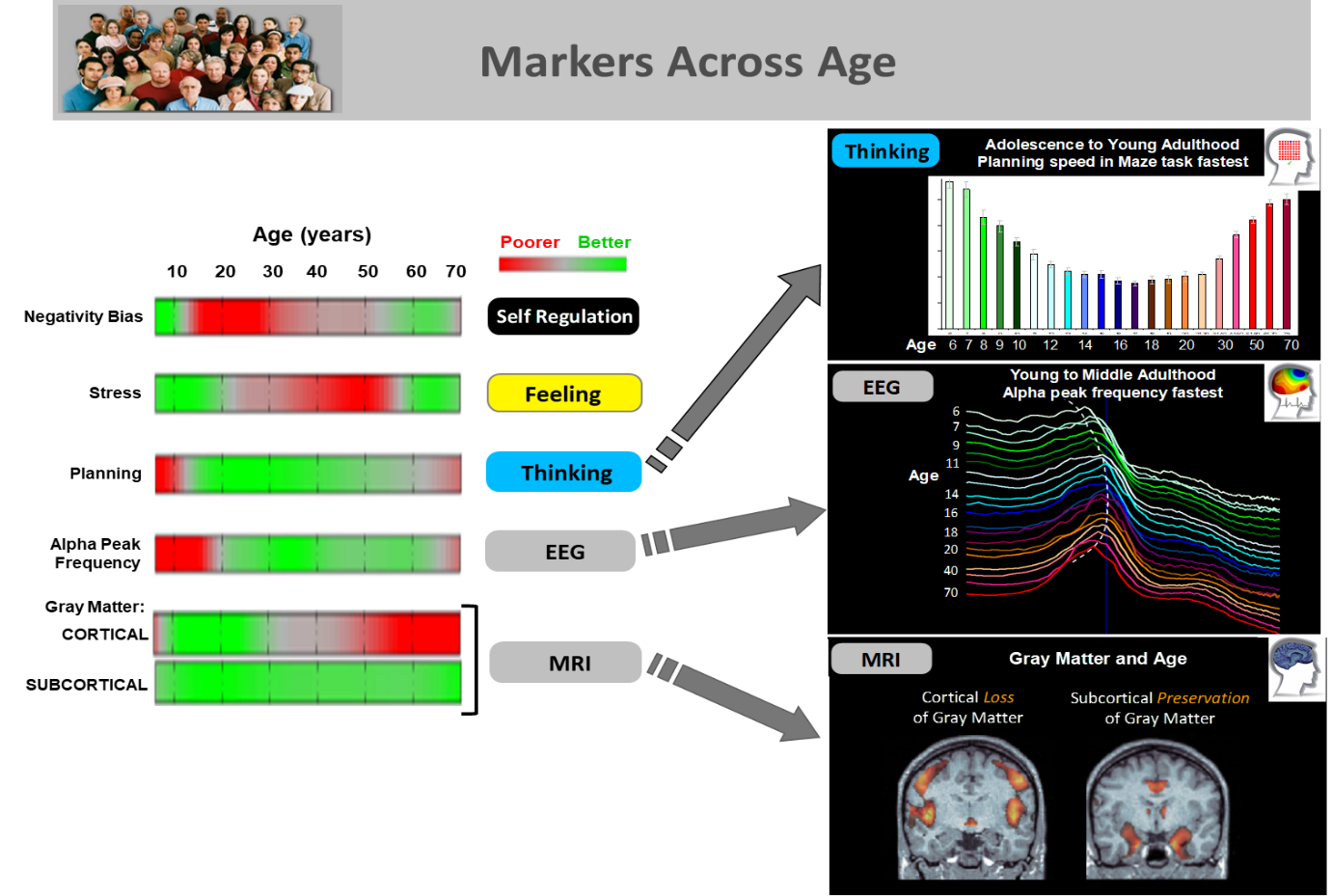
3. Lifespan Stages in Emotional Functioning. Adolescence and early adulthood are characterized by low response to threat but high automatic responses to social signals of approval and reward. Older adults show a much greater prolonged response to signals of threat or fear. Genetics also influences age-related changes in emotional functioning across the lifespan.
3. Anxiety and Depression
Anxiety and Depression are independent conditions, but are also linked in complex ways that are not well understood. The datasets within the Total Brain International Database capture the full span of this continuum from vulnerability through to subclinical symptomology and clinical disorder:
- N = 4,700+ Normative cohort, with a range of subclinical depressive and anxiety symptoms.
- N = 2,650 clinical cohort with diagnosed Depression and Anxiety disorders patients.
- N = 31,000+ cohort with unspecified psychological disorders, who sought support for mental health services, of which 55% have depressive and anxiety symptom level data.
iSPOT-D Depression Trial. iSPOT-D (International Study To Predict Optimized Treatment in Depression) was a $16M clinical trial to identify objective predictors of treatment response after 8 weeks to three of the most commonly used antidepressants: Escitalopram (Lexapro), Sertraline (Zoloft), and Venlafaxine-XR (Effexor). N = 1,008 MDD patients were acquired in the experimental group and N = 704 in the replication group, across 18 testing sites in 5 countries. See the iSPOT Trials tab for full details.
There are several cohorts of diagnosed clinical groups with a total N = 2,650, all with the same Psychophysiology, Cognition, and Questionnaire data: N = 1,712 Major Depressive Disorder patients from the iSPOT-D trial; N = 646 Depressive Disorder patients; N = 124 Generalized Anxiety Disorder (GAD) patients; N = 56 Panic Disorder patients; N = 112 Post-traumatic Stress Disorder (PTSD) patients.
There is also a very large clinical cohort of over N = 31,000 from counseling, psychology, psychiatry, or neurofeedback clinics. This dataset is ideal for analyses aligned with the NIMH RDoC research framework, which promotes the utility of using mixed, diagnosis-independent samples to identify underlying substrates of the depression-anxiety spectrum of emotional dysregulation mood disorders.
4. Cognition
4.1 Normative Cognition Database
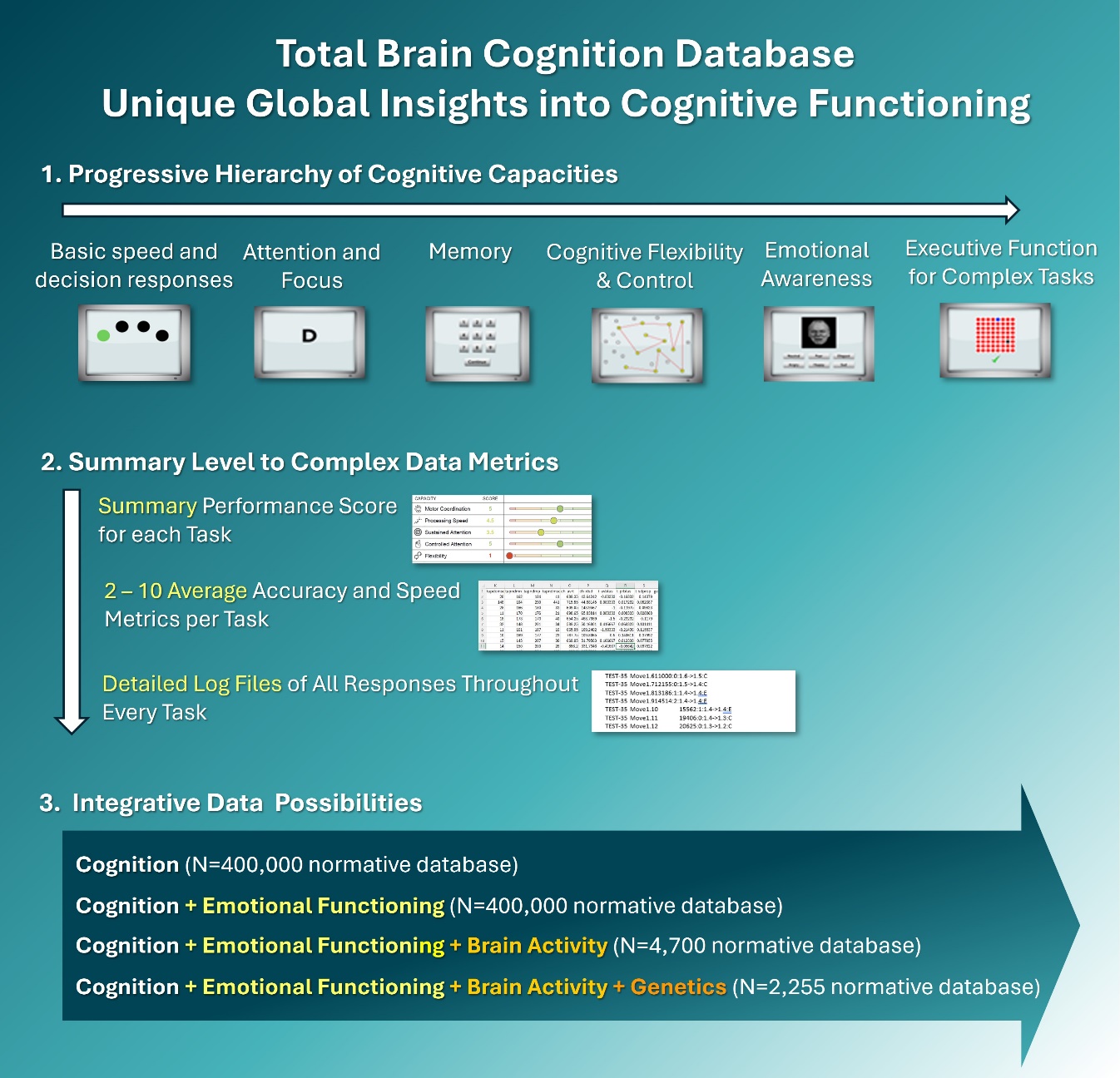
The Total Brain Normative Cognition Database is unique in providing global insights into cognitive functioning. The set of cognitive tests is designed to capture a progressive hierarchy of cognitive skills — starting with basic speed and decision responses, building in turn to attention and focus, memory span, cognitive control and inhibition, cognitive flexibility, emotional awareness, and complex executive function.
The expansive normative cohort of over N = 400,000 provides cognitive performance data with both raw scores and normative z-scores, STEN scores, and percentile scores relative to age and gender. Highly detailed log files of individual responses to each stimulus throughout each task are also available.
4.2 Healthy Aging, Mild Cognitive Impairment, and Dementia
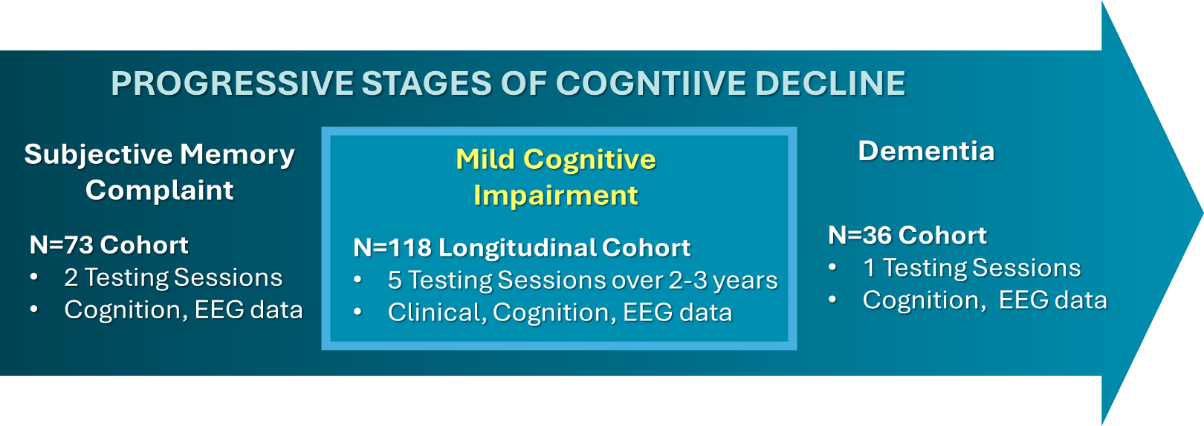
The Total Brain Database contains cohorts from each of the SMC (Subjective Memory Complaint), MCI (Mild Cognitive Impairment), and Dementia stages, with progression tracked within the same individuals over time — a total of N = 277 with 636 testing sessions — in addition to the comparative database of healthy aging.
- N = 73 SMC cohort with baseline and follow-up sessions.
- N = 118 MCI cohort capturing progression of the disorder over 2–3 years with 5 testing sessions across this time.
- N = 36 Alzheimer's Dementia cohort with cognition and psychophysiology batteries collected.
4.3 Traumatic Brain Injury
The Traumatic Brain Injury (TBI) group contains N = 343, with cognition and psychophysiology assessments, including resting EEG as well as EEG during several cognitive tasks. This cohort provides an unprecedented opportunity to compare common and unique elements of cognitive performance and underlying neural substrates between TBI, SMC, and MCI populations — all tested on the same standardized batteries.
5. Child and Adolescent Mental Health and Cognition
5.1 ADHD
There is a cohort of N = 851 children and adolescents with ADHD collected as part of two comprehensive studies of Clinical-Cognition-EEG assessment before and after 6 weeks of stimulant treatment (n = 499 from iSPOT-A Trial; n = 352 from BRAINnet ADHD Study). This dataset is best for:
- Diagnostic differences between ADHD or ADHD subtypes versus controls.
- Analysis of the effects of stimulant medication.
- Prediction and effects of treatment response.
- Genetic models for diagnostic and prognostic tests.
There are also N = 23,870 ADHD-focused clinic patients with cognitive data, providing one of the world's largest ADHD real-world datasets.
5.2 Child and Adolescent Emotional, Behavioral, and Learning Disorders
The database contains N = 21,441 from clinics treating emotional, behavioral, and learning disorders, including Conduct Disorder (N = 44), Conversion Disorder (N = 56), Anorexia (N = 42), and other diagnostic groups.
6. Neurological and Other Clinical Cohorts
Beyond depression, anxiety, cognition, and ADHD, the database includes:
- Schizophrenia / Psychosis: N = 160, with the majority being First Onset Schizophrenia (N = 140).
- Substance Abuse: N = 10,339 patients from addiction recovery clinics.
- Sleep Disorder: N = 444.
- Learning Disorders in Adults: N = 365.
- Neurology Clinics: N = 7,095.
- HIV: N = 17.
Database Summary: Who Is in the Database
The table below is drawn from Appendix B1 of the Total Brain International Database documentation and shows the full breakdown of all subject groups, test sessions, data points, and available data modalities.
| Subject Group | People | Test Sessions | Data Points | w/ DASS | w/ Cognition / Q | w/ Psychophys. | w/ Genetics | w/ Imaging |
|---|---|---|---|---|---|---|---|---|
| TOTAL | 507,744 | 631,077 | 6,998,611,824 | 262,081 | 622,808 | 35,602 | 4,003 | 760 |
| NORMATIVE | ||||||||
| Normative Total | 400,442 | 491,265 | 1,744,530,151 | 200,504 | 491,003 | 5,490 | 2,255 | 599 |
| Core Normative Dataset | 4,111 | 4,661 | 916,638,174 | 3,305 | 4,399 | 4,328 | 1,743 | 438 |
| iSPOT-A and iSPOT-D Trial Controls | 631 | 3,790 | 296,652,200 | 1,135 | 3,790 | 1,162 | 512 | 161 |
| Employee and Consumer User Groups | 395,700 | 482,814 | 531,239,777 | 196,064 | 482,814 | — | — | — |
| CLINICAL | ||||||||
| Clinical Total | 107,302 | 139,812 | 5,254,081,673 | 63,498 | 137,502 | 30,865 | 2,130 | 290 |
| Depression | ||||||||
| Depression Total | 2,358 | 11,854 | 1,785,430,274 | 3,296 | 11,838 | 3,576 | 1,507 | 226 |
| Major Depressive Disorder (iSPOT-D Trial) | 1,712 | 11,150 | 1,666,489,348 | 2,876 | 11,150 | 2,893 | 1,507 | 226 |
| Major Depressive Disorder (BRAINnet Study) | 138 | 172 | 40,621,421 | 110 | 172 | 159 | — | — |
| Clinical Patients with Depressive Disorder | 508 | 532 | 78,319,505 | 310 | 516 | 524 | — | — |
| Anxiety | ||||||||
| Anxiety Total | 292 | 319 | 54,820,131 | 213 | 315 | 306 | 17 | — |
| Generalized Anxiety Disorder | 124 | 126 | 29,548,160 | 80 | 123 | 124 | — | — |
| Panic Disorder | 56 | 56 | 7,686,280 | 55 | 56 | 53 | — | — |
| Post-Traumatic Stress Disorder (PTSD) | 112 | 137 | 17,585,691 | 78 | 136 | 129 | 17 | — |
| Mixed Clinical Mental Health | ||||||||
| Adult Mixed Mental Health Dataset (diagnosis not known) | 31,358 | 35,939 | 2,320,399,633 | 18,681 | 34,423 | 11,578 | — | — |
| Age-Related Cognitive Decline and Dementia | ||||||||
| SMC, MCI, Alzheimer's Dementia Total | 227 | 636 | 52,362,193 | 166 | 630 | 600 | — | — |
| Subjective Memory Complaint (SMC) | 73 | 128 | 6,003,878 | 73 | 128 | 119 | — | — |
| Mild Cognitive Impairment (MCI) – 3-year progression study | 118 | 470 | 39,609,171 | 75 | 464 | 447 | — | — |
| Alzheimer's Dementia | 36 | 38 | 6,749,144 | 18 | 38 | 34 | — | — |
| ADHD (6–18 years) | ||||||||
| ADHD Total | 26,314 | 30,599 | 679,701,767 | 7,576 | 30,084 | 3,042 | 546 | 39 |
| iSPOT-A Trial ADHD Patients | 499 | 928 | 217,247,727 | 892 | 928 | 911 | 474 | 39 |
| BRAINnet ADHD Study | 352 | 506 | 76,260,370 | 296 | 425 | 487 | 72 | — |
| ADHD Clinic Patients (with confirmed diagnosis) | 1,593 | 1,684 | 295,220,046 | 906 | 1,250 | 1,644 | — | — |
| ADHD Clinic Patients (diagnosis not confirmed) | 23,870 | 27,481 | 90,973,624 | 5,482 | 27,481 | — | — | — |
| Child & Adolescent Emotional, Behavioral, and Learning Disorders | ||||||||
| Total | 21,441 | 24,566 | 97,415,370 | 6,641 | 24,566 | 177 | — | — |
| Conduct Disorder | 44 | 46 | 3,816,814 | 38 | 46 | 42 | — | — |
| Conversion Disorder | 56 | 66 | 10,605,633 | 43 | 66 | 65 | — | — |
| Anorexia | 42 | 72 | 9,205,329 | 37 | 72 | 70 | — | — |
| Psychosis Disorders | ||||||||
| Psychosis Disorders Total | 160 | 202 | 61,548,404 | 25 | 202 | 191 | — | 25 |
| First Onset Schizophrenia | 140 | 181 | 57,350,368 | 12 | 181 | 172 | — | 25 |
| Substance Abuse | ||||||||
| Patients from Addiction Recovery Clinics | 10,339 | 17,573 | 41,688,695 | 16,930 | 17,573 | — | — | — |
| Neurological & Other Clinical | ||||||||
| Neurological & Other Total | 14,813 | 18,124 | 160,715,206 | 9,970 | 17,871 | 1,056 | 60 | — |
| Sleep Disorder | 444 | 612 | 23,113,452 | 188 | 611 | 178 | 60 | — |
| Traumatic Brain Injury | 343 | 368 | 42,645,626 | 205 | 243 | 365 | — | — |
| Neurology Clinics | 7,095 | 9,520 | 27,377,668 | 6,586 | 9,520 | — | — | — |
| Learning Disorders in Adults | 365 | 517 | 1,335,514 | 72 | 517 | — | — | — |
Database Partnerships & Licensing
Interested in Accessing the Database?
The Total Brain International Database is available for research and commercial licensing to pharmaceutical companies, academic institutions, and technology partners. For inquiries regarding database access, partnerships, and licensing agreements, please contact:
licensing@totalbraindatabase.com